The Seeds of Curiosity (#18 Varun Srivastava, Electrical Engineering, Batch of 2026)
A lot of leaders I met had arrived at engineering almost by accident; few people actually plan that path. My heart wanted something else for a long time, though that wasn't always obvious.
Early Life
Growing up in Prayagraj, I witnessed a beautiful coexistence of faiths celebrating side by side. For me, learning was about practical understanding. In class 10, just two days before my science pre-board exam, Muharram was observed in my city. Instead of staying home to study, I felt an irresistible pull to step outside and witness it to observe the people, the emotions, and the rhythm of the crowd. Whenever major events like the Kumbh took place, I would hop on my scooty and immerse myself in the experience, trying to understand how society truly functions beyond the pages of textbooks.
I first heard about the IITs through my elder siblings, they used to talk about colleges. Engineering wasn't a common choice in my family. Around class 8, my maternal cousin's college choice introduced me to the idea of IIT. From classes 9 to 12 I didn't specifically prepare for it, but in class 9 I joined Ramanujam coaching centre and dove into reasoning and advanced physics beyond NCERT. Still, the JEE didn't feel like the central goal of my life.
Everything shifted after my class 10 results, I scored 100 in Social Science. That result made me realize I'd always been more inclined toward social studies.

Around the end of class 10, friends introduced me seriously to the JEE. My friend Vinayak, whom I'd known since class 1, helped me see that JEE was worth attempting. In class 11 I joined Aakash Institute with Divyam. We studied together.
When results came, I qualified for JEE but only for NIT. I decided to take a drop year, but Chemistry went terribly in JEE Advanced. Walking out of the exam centre I instinctively knew I wouldn't clear it. The centre was 12 kilometres away; I walked 5-6 kilometres back in shock, processing that failure step by step. Many first-year NIT students spend months recovering from not clearing Advanced, but I processed most of it during that walk.
For three or four days after reaching home, I felt broken. Then my sister said something that changed my outlook: I could see this positively or negatively. Negativity would give me nothing. Facing a huge failure at a young age itself was a kind of learning. It took about a week to recover.
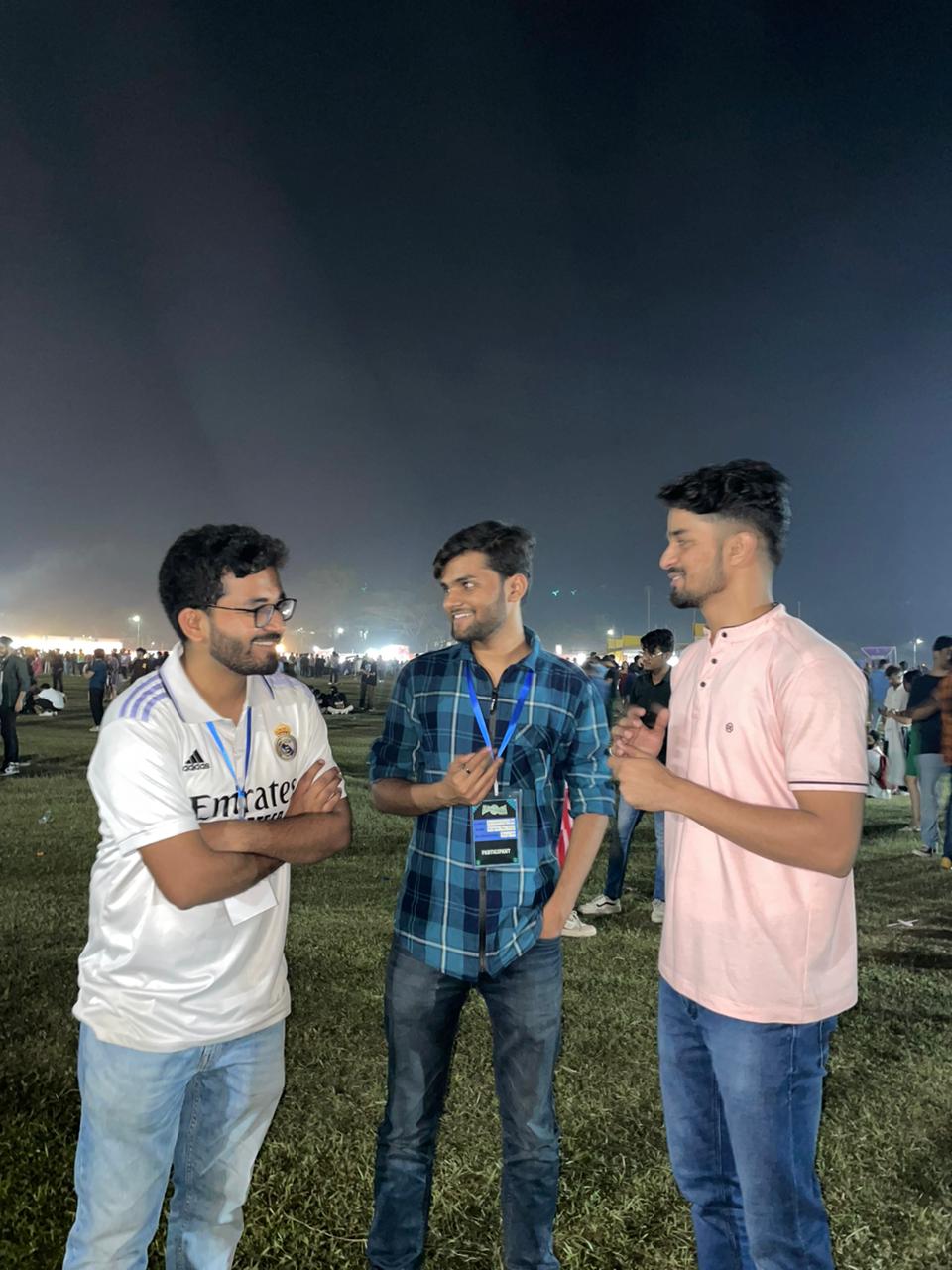
After that I felt aimless. Most of my school friends had moved ahead to IITs and other places. After two or three months, Divyam, who handled the crisis better, became my support. I was ready to leave engineering for a BA in Political Science or History, but Divyam convinced me to attend counselling. We thought, "We need to figure this out together."
Both of us got NITA, Electrical for me and Civil for him. I remember being on the bus from Lucknow to Prayagraj when results came; relief washed over me knowing I wouldn't be going alone. I researched Agartala, found it similar to Prayagraj, and learned the college was decent. I accepted it and came to NIT Agartala.
Finding Home Away from Home
But reality hit fast. When I entered campus with my father, within days I realized I was truly on my own for the first time. Even with a roommate there's a distinct feeling of being alone. There's freedom and opportunity, but no immediate support system. Still, I discovered that friends can become family. My roommate Vasu and I bonded over our shared setbacks and the stories of how we'd ended up here. For the first month or two, most conversations centred on those disappointments.
We didn't explore much initially: Divyam dove into coding, while I tried web development, app development, and DSA nothing felt right. Eventually I focused on Electrical, which felt familiar because I'd made small projects since childhood.
In every circle, you encounter two kinds of people. The first corrects you instantly, The second allows you the space to make mistakes and learn through them. For me, Chaitanya Bhaiya was that second kind. Much of what I've been able to build stems from people like him who trusted me enough to let me grow. Both types are essential in life, but the latter those who guide with patience rather than correction are truly rare.

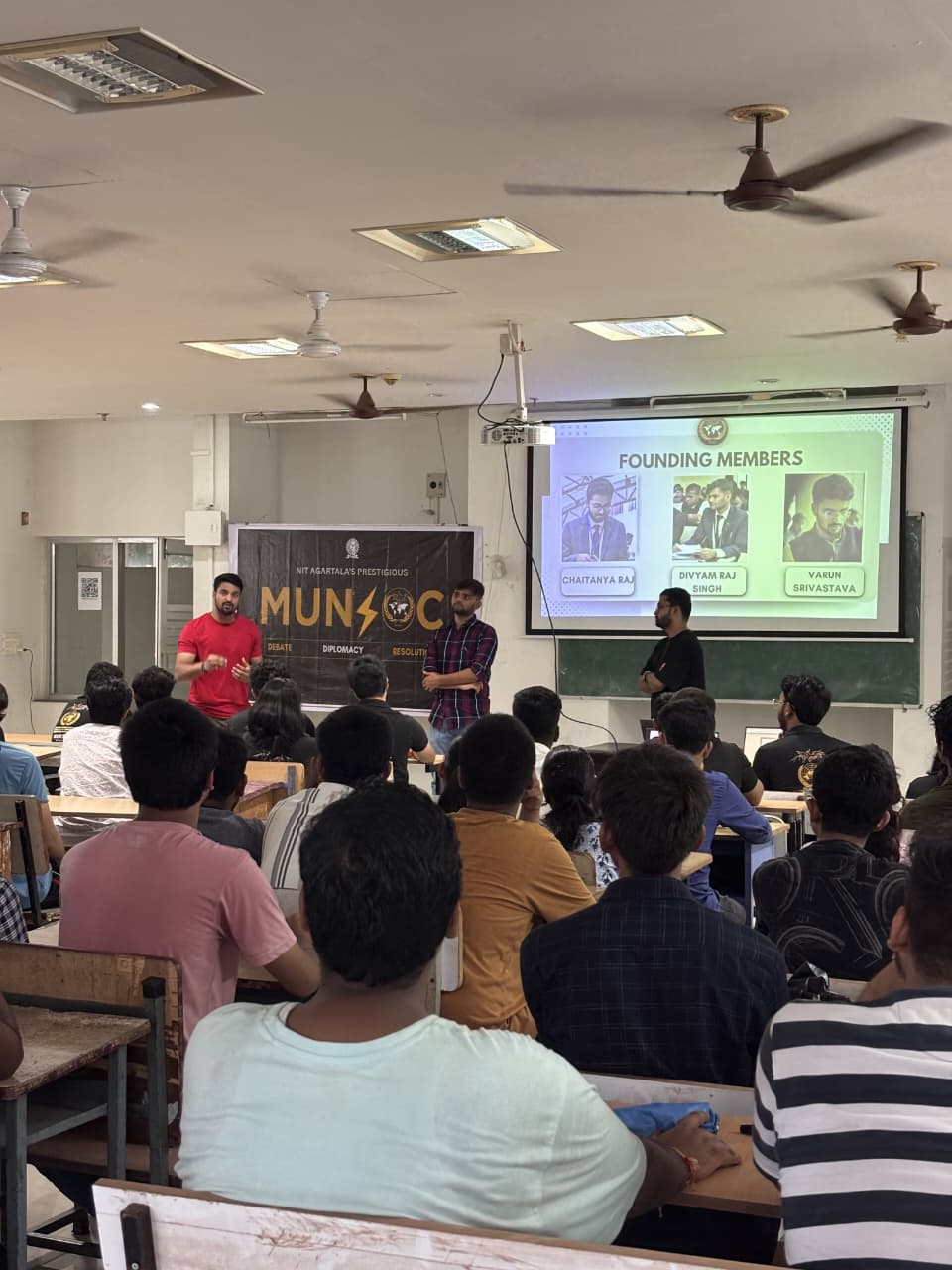
When NLC events began, there were discussions about participating in MUN. I didn't know what MUN was at first. We were going to Guwahati for the first time and I was allocated Bangladesh as my first country. In first year emotions run high, so I connected deeply by reading their constitution, understanding their problems. MUN resonated with my interests. I met incredible delegates like David Das and Chaitanya Bhaiya. I didn't win prizes initially, but performing alongside such people taught me a lot. Debating is an art in which small details matter even the way you raise your placard to speak.
After Guwahati, I wanted to explore more MUNs and push my boundaries further. We decided to aim higher, and IIT Bhubaneswar was the next destination. Chaitanya Bhaiya trained Divyam and me in the concept of double delegation, preparing us thoroughly for the challenge ahead. Our efforts paid off when we won High Commendation there. I still remember his call after the results he asked, "Why didn't you get Best Delegate?" That question stayed with me. It made me realize that one achievement should never be the end point; you must always keep striving for the next.
This became the founding principle of MUNSOC: never settle for less. We aimed beyond institute-level recognition and built a structured platform for debating and MUNs at NITA. We partnered with several NITs, IITs, and even international MUN societies, formalizing collaborations through MoUs. These efforts not only inspired other clubs but also strengthened the culture of inter-institute collaboration across campuses.
The journey was challenging. Establishing a club means dealing with technicalities and paperwork; many people have ideas but don't know the process. The faculty-in-charge plays a huge role. We were fortunate to have Gyanabati ma'am, who understood our vision. When she saw that we travelled and brought back prizes without institutional help, she felt inspired and helped greatly with documentation. Still, Divyam, Chaitanya Bhaiya and I spent nights making the paperwork. We learned the importance of college connections and strong senior-junior bonds.
When it came to campus culture, I never supported the idea of ragging or so-called "intros." I've always believed that real respect cannot be demanded — it has to come naturally. A simple, genuine greeting from a junior means far more than forced formality. From the very beginning, MUNSOC upheld that belief by maintaining a culture of mutual respect and healthy senior–junior dynamics.
The Evolution of a Leader
My first year went by in a blur. By second year, I began taking on leadership roles and that's when I figured out a pattern: first year is for exploring, second for achieving, third for giving back, and fourth for "sanyas", placements and peace!
Too many students join clubs in second year and vanish soon after. That's a missed opportunity both for them and for the campus. My mantra's simple: don't complain about ten problems; fix two of them. Small wins compound faster than you think.
That mindset drove us to bring new energy to NIT Agartala's campus culture and reconnect with our alumni. Many said, "Our alumni don't care." Instead of repeating that, Harish, Kuldeep, and I decided to change it. Maybe we didn't fix everything, but we definitely started something. As Simon Sinek says, "Leadership is not about being in charge. It's about taking care of those in your charge."
I explored coding, DSA, and circuits until I realized my interests were wired differently. MUNSOC's discussions on society and policy felt like home. That's where I discovered that I was drawn more toward strategy and human behavior than to software or machines.
Leadership, to me, was never about titles, it was about impact. At MUNSOC, everyone focused on contribution, not competition. Later, as Charge D'Affairs, I kept asking myself: How can I add value from where I stand?

As Internship Coordinator, I once heard someone say NIT Silchar had stronger placements than us despite our better infrastructure. The difference? Alumni engagement. That's when it clicked that Gymkhana should be the bridge between students and alumni.
We started alumni seminars where they asked students, "What can we do for you?" It was a small step, but a meaningful one. Many saw Gymkhana as a "dummy body," but I saw it as a platform for real change if used with purpose.
People often say, "There's no time for clubs and academics." But if you can scroll for hours, you can manage both. Study smart, not nonstop. One week of focused prep can handle exams. Join clubs, meet people, explore ideas, that's where true learning happens.
Leadership taught me one thing: One can make headlines; many can make history. It's not about being the loudest voice, it's about being the one who quietly makes things work.
Beyond the Classroom
Projects matter but there's no universal "placement project." It depends entirely on your target domain. Ideally, every student should maintain two resumes: one for their core branch and one for IT/software, each backed by at least one strong project.
For my core profile, I worked on a Smart India Hackathon (SIH) project, building a chlorine and silver ion testing kit for water safety. It taught me a golden rule: every project must have a "why." Interviewers rarely care about complex circuits or algorithms unless you can explain why you built it and who it helps.
When it comes to placements, let's be honest, patience is the real skill test. Discuss with seniors, know where you stand, and be ready for rejection without losing rhythm. Communication skills are the silent deal-breaker; clearing technical rounds only to fumble in HR because you "couldn't phrase it right" is a heartbreak too many face. Also, don't limit yourself to campus drives, off-campus is where hustle meets opportunity.
Then came the case study part, post-COVID, this culture exploded, with many offering PPI opportunities. My first exposure was IIT Kanpur's "Rajniti", which analyzed why women's representation in governance lags despite constitutional promises. Later, my friend Sumit and I won a national case study competition organised by A1 Fence. What began as casual brainstorming turned into caffeine-fueled nights of strategy. Events like SIH matter too, they tackle real government problems and even influence NIRF rankings.
Beyond the technical grind, my compass pointed toward social impact and policy. For over five years, I've worked with Shuruaat Ek Jyoti Shiksha Ki, an NGO in Prayagraj founded by Abhishek sir, which runs a free school for underprivileged children. Through Think India, I also worked with Shiv Ganga Jhabua in Madhya Pradesh on rural tribal development. These experiences taught me something engineering often misses, we build IQ, but forget EQ.
Living among the Bhil tribes in Jhabua was eye-opening. They may not use fancy tech, but in sustainable development, they're leagues ahead — protecting the environment while growing collectively. Their way of passing on wisdom showed me that education must be regionally rooted and culturally aware, something our NEP is finally emphasizing.
The Vision Forward
Looking ahead ten years, I envision transformation in three key areas.
First, learning won't be confined to lecture halls, students will learn by building, experimenting, and leading initiatives that solve societal challenges.
Second, I imagine a networked campus, where alumni, industry, and academia work seamlessly with mentorship, funding, and innovation flowing in all directions.
Third, I dream of an Innovation Commons, a 24×7 creative hub where any student with an idea can walk in, find a mentor, print a prototype, and turn imagination into impact.
Equally crucial is building strong alumni connections for mentorship, placements, and financial support. Through SARC, our vision is to create a sustainable system that first channels meaningful alumni contributions and later expands to fund student projects, empower clubs, and enhance the institute's national visibility.
At present, alumni engagement lacks accessible avenues. One initiative we're exploring is an Alumni Card, a subscription model, perhaps ₹5,000 annually, that grants alumni access to institute facilities and networks. Regular global alumni meets and batch reunions should also be institutionalized, with event announcements made three to four months in advance for better participation.
Of course, none of this was a solo effort. I've been fortunate to have incredible friends, Sumit, Divyam, Chaitanya Bhaiya, Vasu, Dhruv, Harish, Pawan, Aman and Kuldeep and seniors like Manish Bhaiya, Rajiv Bhaiya, and Avinash Bhaiya, whose guidance shaped every step of this journey also my elder brother Yash Bhaiya has been my anchor the one who stood by me through every challenge, encouraged every initiative I took, and believed in me even when I doubted myself.
A Legacy of Values
When people ask, "Where do you see yourself in ten years?" I usually say, hopefully not bald from stress or broke from passion projects. I just want to be stable enough to sleep peacefully, yet restless enough to wake up with purpose. No quiet mornings with tea and newspapers for me, I'd rather still be chasing ideas that keep life exciting.
Currently Placed in an IT Firm, though I remain deeply drawn to social studies and policy. If someday I find my corporate role doesn't offer the depth of meaning I seek, I'll pivot, toward NGOs, policy, or civil service. Whatever the path, the goal remains the same: to create value and drive positive change.
When asked how I'd like to be remembered, I don't think in terms of personal fame. I'd rather be remembered for building something that outlives me a culture of collaboration, responsibility, and purpose. If the systems or initiatives we began continue helping others identify problems, take ownership, and act meaningfully, that would be the true legacy.
Because in the end, legacies aren't built from names, they're built from values that endure, and the spirit of teamwork that keeps them alive.
Piece written by - Dattatreya Datta.